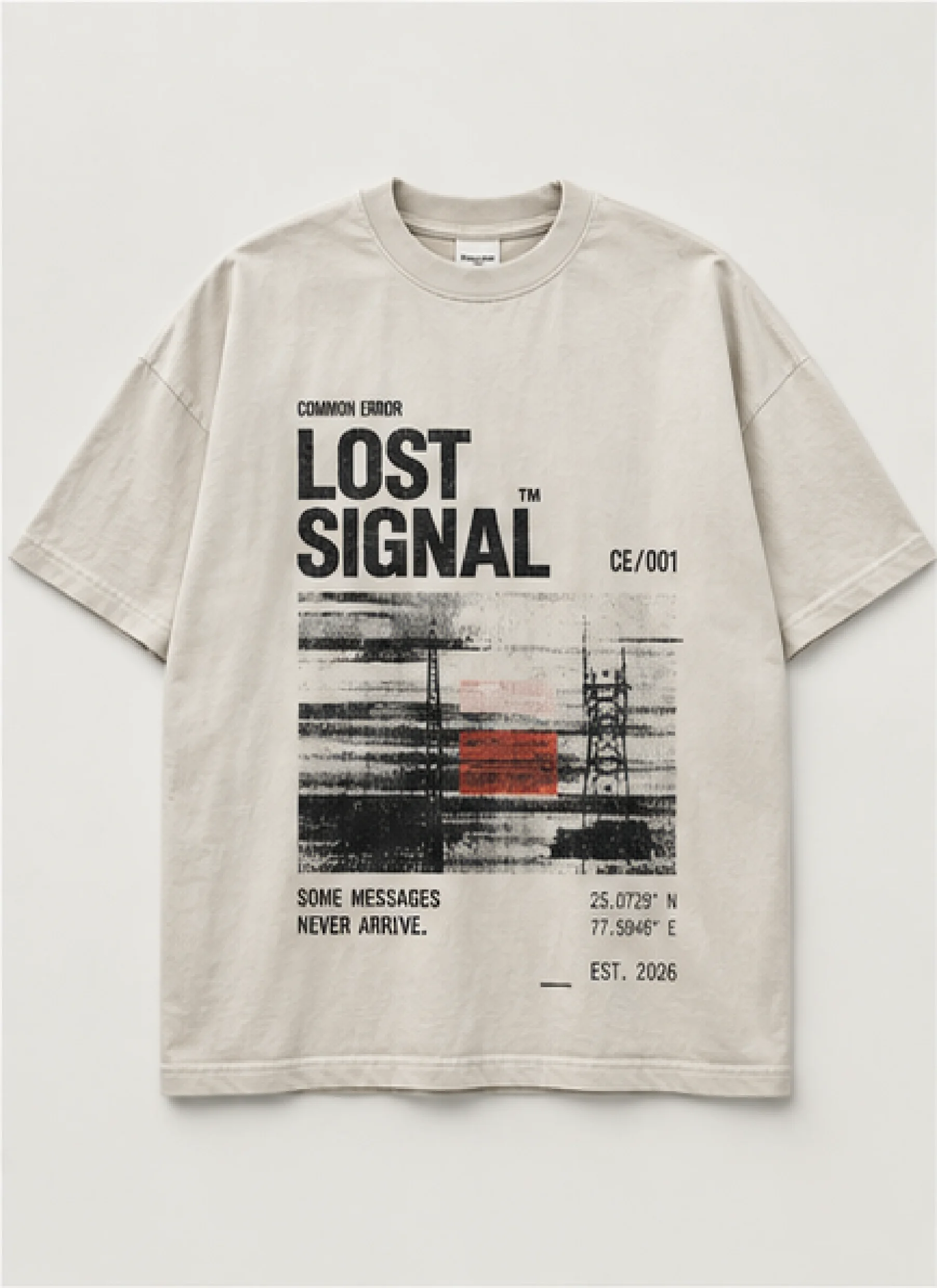
FOUR GENERATIONS OF A PHOTOCOPY
What a document loses each time it is copied, and why the fourth pass is the one worth printing.
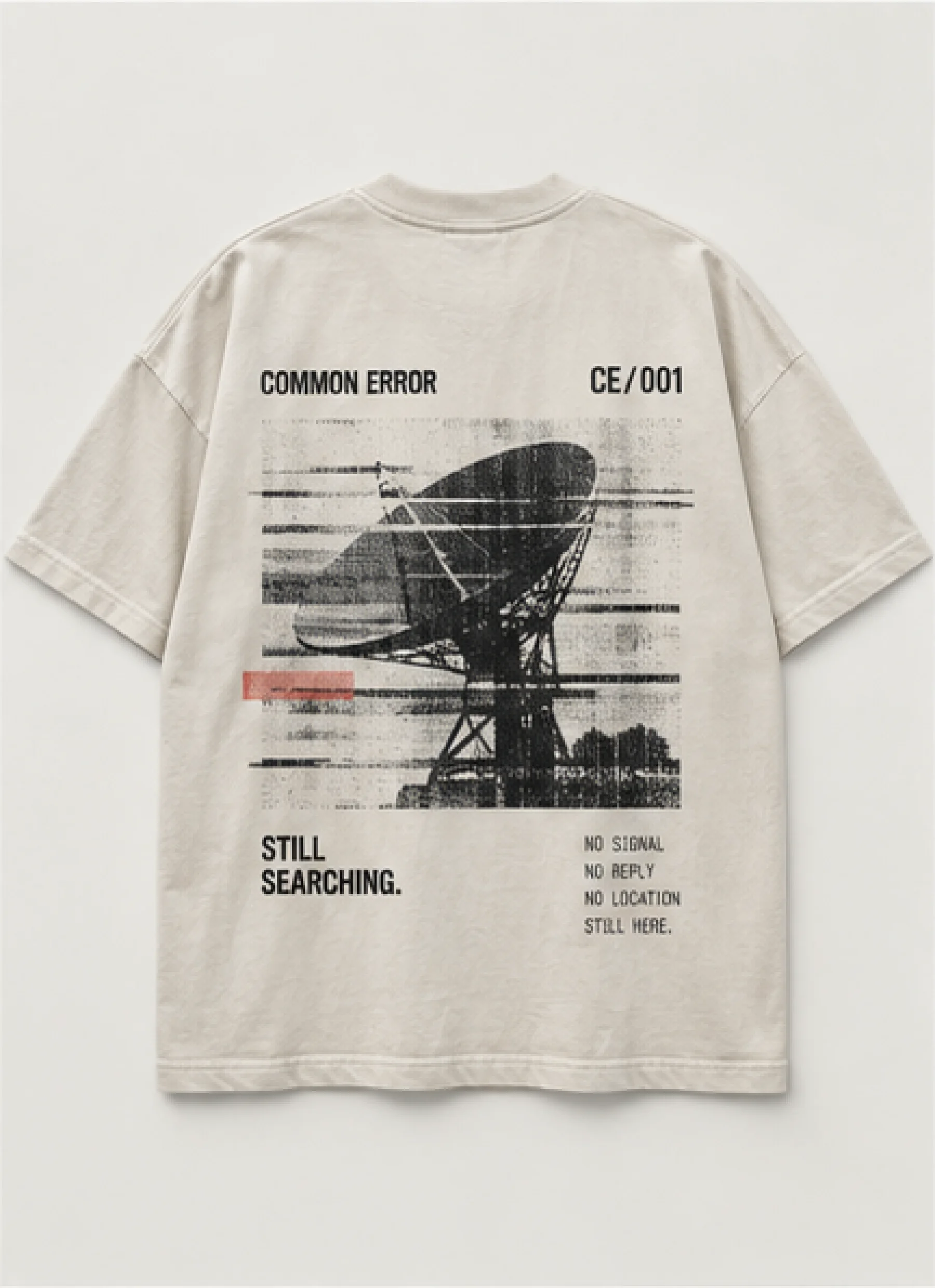
DROP 001 — LOST SIGNAL — BACK PRINT ARTWORKINTERRUPTED BARS
A photocopier does not reproduce a document. It makes a decision about it. Every pass through the glass throws away the values it cannot commit to, pushes the middles toward black or white, and thickens every edge by a fraction of a millimetre.
Run a page through four times and the decisions accumulate into something the original never contained. Thin rules close up. Counters in letterforms fill in. Grey areas break into a coarse, irregular grain that has no relationship to the halftone it started as.
WHY THE FOURTH PASS
The first copy is just a worse original. The second is unremarkable. By the third the type has started to behave like a drawing rather than a text. The fourth is where the document stops being readable as information and starts being readable as a surface — and that is the point at which it is worth putting on a garment.
The graphic is not a picture of a degraded document. It is a degraded document.
For the LOST SIGNAL back print we copied a departure-board photograph four times, scanned the fourth generation at 1200 dpi, and separated it by hand. Nothing was added. The broken edges in the print are the machine's, not ours.
WHAT THIS COSTS
- 01Four passes, four different machines — a single machine repeats its own bias
- 02Scanned at 1200 dpi so the grain survives as geometry rather than noise
- 03Separated by hand into four screens at 55 lpi
- 04Printed wet-on-wet so the passes break unevenly, as a signal does
It would be faster to apply a filter. It would also look like a filter, and everybody can tell.
WHERE THIS SHOWS UP
ALL PIECES →